
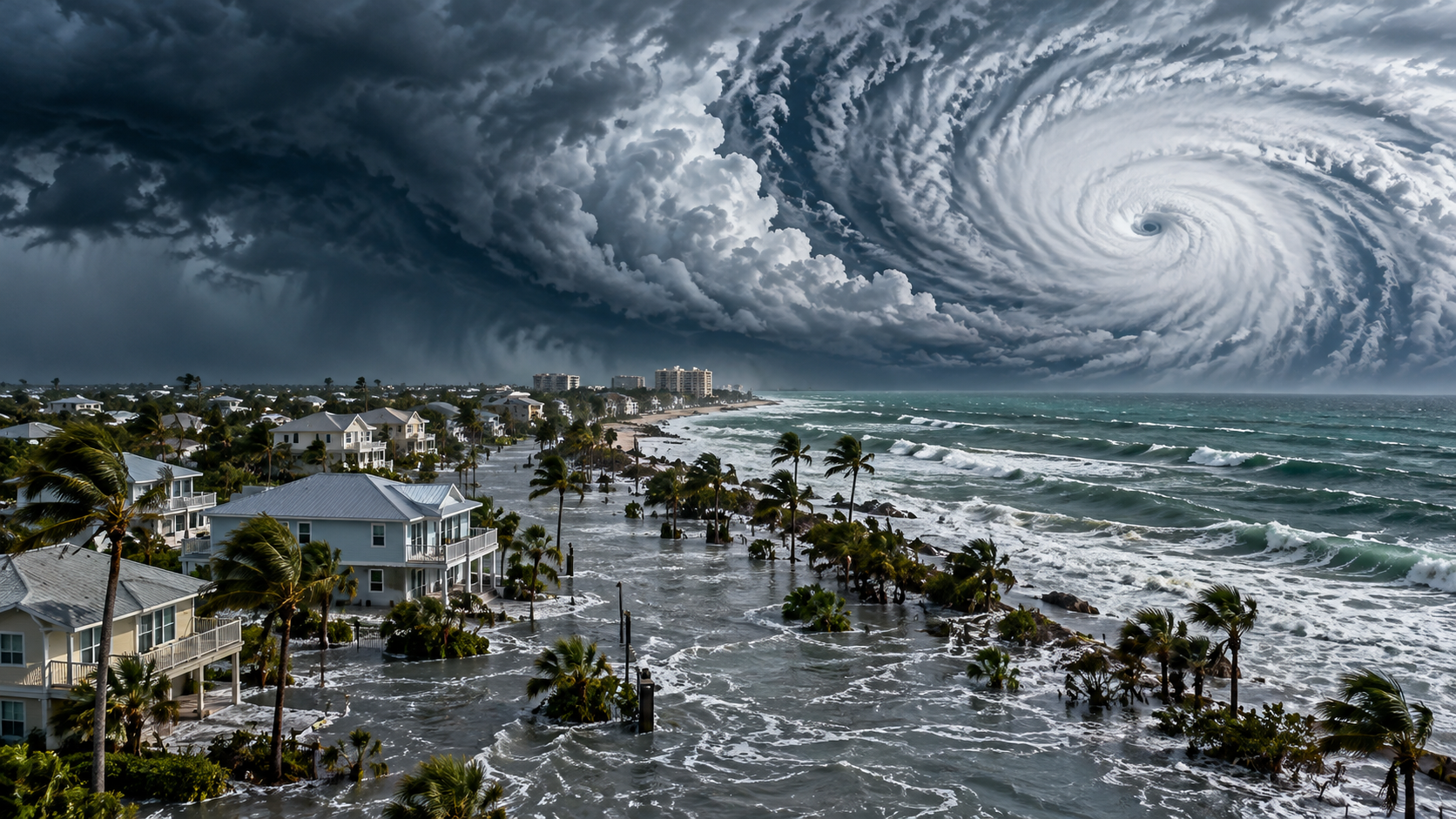
When a hurricane is described as Category 1, 2, 3, 4, or 5, the number tells you one important thing: the storm’s maximum sustained wind speed. It does not tell you how high the storm surge will be, how much rain will fall, or how far flooding may travel inland.
This distinction matters because water is often the most dangerous part of a hurricane. A lower-category storm can still create a life-threatening surge, especially when it is large, slow-moving, or approaching a coastline that allows water to pile up.
What Hurricane Categories Actually Measure
The Saffir-Simpson Hurricane Wind Scale places hurricanes into five categories according to their maximum sustained wind speed:
- Category 1: 74–95 mph
- Category 2: 96–110 mph
- Category 3: 111–129 mph
- Category 4: 130–156 mph
- Category 5: 157 mph or higher
The scale is useful for estimating the potential for wind damage to roofs, walls, trees, power lines, windows, and doors. However, the National Hurricane Center emphasizes that it does not account for storm surge, rainfall flooding, or tornadoes.
What Is Storm Surge?
Storm surge is an abnormal rise in seawater produced by a storm, above the level expected from the normal astronomical tide. Strong winds push water toward the coast, where it can flood beaches, roads, neighborhoods, and structures. Waves riding on top of the elevated water can increase the destructive force.
Storm tide is the combined height of the storm surge and the normal tide. If peak surge arrives near high tide, the resulting water level can be considerably higher than the surge alone.
Why Wind Speed Cannot Predict Surge Height
Wind speed is only one of several factors that determine storm surge. Two hurricanes with similar wind speeds can produce very different coastal flooding.
Storm Size
A large hurricane can push water across a much wider area and for a longer period than a compact storm. This means a broad Category 1 or Category 2 hurricane may produce a more extensive surge than a smaller, stronger hurricane.
Forward Speed
The speed at which a hurricane moves affects how long winds push water toward shore. A slow-moving storm may allow water to accumulate and can prolong flooding, while a faster storm may create different surge patterns depending on its path and angle of approach.
Angle of Approach
A storm moving directly toward the coast can drive water inland differently from one traveling parallel to the shoreline. Small changes in track can dramatically change which communities experience the highest water.
Coastal Shape and Ocean Depth
Shallow offshore water and bays can amplify storm surge because the incoming water has less room to disperse. Local topography, barrier islands, canals, rivers, and the shape of the coastline also influence how far water can travel inland.
Tides, Waves, and Rainfall
High tide can add to the total water level. Breaking waves add force and additional height, while heavy rainfall can overwhelm drainage systems and slow the retreat of surge water. These hazards can occur together even though none is represented by the hurricane category.
Can a Category 1 or 2 Hurricane Produce Dangerous Storm Surge?
Yes. Every hurricane category can produce life-threatening storm surge. Tropical storms and post-tropical systems can also cause serious coastal flooding. A storm’s category may fall before landfall while surge that was already generated continues toward the coast.
That is why the word “downgraded” can create a false sense of security. Lower wind speeds do not automatically mean the flood threat has ended.
How Storm Surge Is Forecast
Forecasters evaluate the complete storm rather than applying a fixed surge height to each category. They consider projected track, intensity, size, forward speed, coastline shape, water depth, and tides. NOAA’s Sea, Lake, and Overland Surges from Hurricanes—known as the SLOSH model—helps estimate potential coastal inundation.
Residents should monitor official storm-surge watches and warnings, local inundation maps, evacuation zones, and instructions from emergency-management officials. The hurricane category alone is not an evacuation guide.
What Homeowners Should Watch Instead of Category Alone
- Storm-surge forecasts: Check the predicted water height above normally dry ground.
- Evacuation zones: Know whether your property is in a surge-prone area.
- Local warnings: Follow evacuation orders immediately, even if the storm is not classified as a major hurricane.
- Rainfall forecasts: Inland and freshwater flooding may occur far from the coast.
- Wind arrival times: Complete preparations before tropical-storm-force winds make travel and outdoor work unsafe.
- Property-specific vulnerabilities: Consider elevation, nearby waterways, drainage, and the strength of exposed openings.
Wind Protection Still Matters
Storm surge and wind are separate hazards, and preparing for one does not replace preparing for the other. Windborne debris can break windows and doors, allowing wind and rain into a structure and increasing internal pressure. Protecting vulnerable openings is therefore an important part of a broader hurricane plan.
Atlas Armor hurricane screens are designed to protect exposed openings from high winds and windborne debris while providing convenient deployment options. They should be combined with evacuation planning, flood awareness, emergency supplies, and guidance from local officials.
The Bottom Line
A hurricane category measures wind speed—not total danger. It cannot tell you the height of storm surge or the extent of coastal flooding. Storm size, track, forward speed, coastline shape, water depth, tides, waves, and rainfall all help determine how severe the water threat may become.
Never decide whether to prepare or evacuate based only on the category number. Use official National Hurricane Center forecasts and follow instructions from local emergency-management authorities.
Want to strengthen your home’s openings before the next hurricane? Contact Atlas Armor to learn more about professionally engineered hurricane-screen solutions.


