
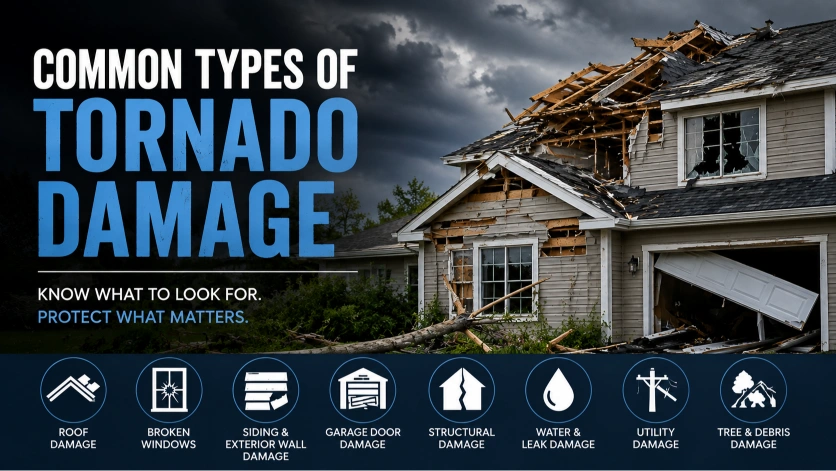
A tornado can cause extensive property damage in only a few minutes. Powerful winds can tear materials from a roof, break windows, damage exterior walls, uproot trees, and turn everyday outdoor objects into dangerous flying debris.
Some damage is easy to spot immediately. Missing shingles, shattered glass, fallen trees, and broken fencing are obvious signs that a property has been affected. Other problems, including loosened roof connections, hidden water intrusion, or damage behind walls, may take longer to appear.
The severity of tornado damage depends on several factors, including the strength of the storm, the construction and condition of the building, the surrounding landscape, and whether vulnerable openings were protected.
Knowing which areas of a home are most at risk can help property owners prepare before severe weather and recognize problems that require professional attention afterward.
Roof Damage
The roof is one of the most exposed parts of a home during a tornado. High winds can lift shingles, bend metal panels, loosen flashing, detach gutters, and pull away sections of roof decking.
Even a relatively small area of roof damage can create a path for rain to enter the attic or living space. Once moisture gets inside, it may affect insulation, ceilings, walls, flooring, and electrical systems.
Common signs of tornado roof damage include:
- Missing, lifted, or curled shingles
- Bent or detached metal roofing
- Damaged flashing around vents or chimneys
- Broken roof vents
- Missing gutters or downspouts
- Exposed roof decking
- Sagging or uneven roof sections
- New water stains on ceilings or walls
Not every roofing problem can be seen from the ground. Fasteners, underlayment, and roof-to-wall connections may have been weakened even when the exterior looks mostly intact. For that reason, a professional roof inspection is often a smart step after a tornado or major wind event.
Broken Windows and Glass Doors
Windows and glass doors are especially vulnerable during tornadoes because they can be struck by windborne debris. Tree branches, pieces of roofing, outdoor furniture, fencing materials, signs, and loose construction materials can all become airborne.
When glass breaks, the damage often extends beyond the window or door itself. Wind, rain, dirt, and debris may enter the property, damaging furniture, electronics, flooring, drywall, and personal belongings.
Property owners may notice:
- Cracked or shattered glass
- Bent or damaged window frames
- Broken seals
- Loose hardware
- Damaged tracks
- Doors that no longer close correctly
- Water entering around the opening
Protecting exterior openings can help reduce their exposure to flying debris and strong winds. Homeowners concerned about windows, glass doors, patios, or lanais can speak with a storm protection specialist about options suited to their property.
Flying Debris Damage
Flying debris is one of the most destructive elements of a tornado. Strong winds can pick up ordinary objects and send them into buildings, vehicles, trees, and utility systems at high speed.
Common sources of debris include:
- Tree limbs
- Patio furniture
- Garbage containers
- Roofing materials
- Fence panels
- Tools
- Signs
- Outdoor decorations
- Construction materials
- Pieces of nearby structures
Even smaller objects can cause serious damage when they are moving quickly. A loose branch or piece of metal may break a window, puncture siding, damage a roof, or strike outdoor equipment.
Before severe weather arrives, homeowners should move loose outdoor items into a garage, shed, or another secure area whenever possible. Grills, umbrellas, planters, toys, tools, and patio furniture should not be left unsecured.
This cannot eliminate debris coming from surrounding properties, but it can reduce preventable hazards around the home.
Siding and Exterior Wall Damage
Tornado winds can pull siding away from a building, crack stucco, bend fascia, detach soffits, and damage exterior insulation or protective barriers.
Flying debris can also puncture exterior surfaces. Once the outer layer of a wall is damaged, water may reach the insulation, framing, drywall, and electrical components underneath.
Signs of exterior wall damage may include:
- Missing or loose siding
- Cracked stucco
- Detached soffits or fascia
- Punctures in exterior walls
- Exposed insulation
- Gaps around windows and doors
- New cracks in brick or masonry
- Separation between building materials
Not every crack is a sign of major structural damage, but new or expanding cracks should be examined. A qualified contractor or building professional can determine whether the issue is cosmetic or connected to movement within the structure.
Garage Door Damage
Garage doors are among the largest openings in many homes, which can make them vulnerable to wind pressure and debris impact.
During a tornado, a garage door may bend inward, come off its tracks, lose panels, or separate from the frame. If the door fails, wind and rain can enter the garage and damage vehicles, tools, stored belongings, and interior walls.
A large opening can also increase pressure inside the building, potentially placing additional stress on the roof and surrounding walls.
Before tornado season, homeowners should inspect:
- Tracks and rollers
- Hinges and brackets
- Fasteners
- Door panels
- The surrounding frame
- Any existing reinforcement
Older, damaged, or poorly secured garage doors may require repairs or upgrades before severe weather occurs.
Exterior Door Damage
Entry doors can fail when hinges, locks, latches, or frames are unable to withstand strong winds or debris impact.
In some cases, the door itself remains intact while the frame pulls away from the wall. Doors with glass inserts may also crack or shatter, creating another entry point for wind and rain.
Common warning signs include:
- Doors that no longer close properly
- Bent hinges
- Loose or damaged locks
- Cracks around the frame
- Broken glass inserts
- Warping or misalignment
- Water entering around the threshold
Sliding glass doors and other wide openings deserve particular attention because they combine a large glass surface with a broad opening into the home.
Property owners evaluating these areas can ask about tornado protection options for doors, windows, patios, and other exposed openings.
Damage to Patios, Lanais, and Screened Enclosures
Patios, lanais, pool enclosures, pergolas, awnings, and screened outdoor areas are often more exposed than the main structure.
Tornado winds may tear conventional insect screening, bend aluminum frames, detach roof panels, damage patio doors, or break outdoor lighting. Furniture and equipment stored in these spaces may also become airborne.
Damage may include:
- Torn screening
- Bent or collapsed frames
- Missing roof panels
- Damaged patio doors
- Broken pool equipment
- Displaced furniture
- Damage to fans or lighting
- Debris entering covered living areas
Standard insect screens are intended for ventilation and pest control. They should not be confused with engineered storm protection systems designed to resist high winds or debris impact.
Tree and Landscaping Damage
Trees are commonly damaged during tornadoes. Branches may break, trunks may split, and entire trees may be uprooted.
Falling trees and limbs can damage roofs, vehicles, windows, fences, sheds, utility lines, and neighboring properties. Even smaller branches can dent siding, break gutters, or damage outdoor equipment.
Landscaping damage may also affect:
- Fences and gates
- Irrigation systems
- Pool equipment
- Garden structures
- Outdoor lighting
- Driveways and walkways
- Storage sheds
Regular tree maintenance can reduce some avoidable risks. Dead branches and visibly weakened trees should be evaluated before severe weather season. However, even healthy trees may fail under tornado-force winds.
Never approach a fallen tree that is touching a power line. The area should be avoided until utility crews or emergency authorities confirm that it is safe.
Structural Damage
Structural damage affects the components that support the building. This may include the roof system, exterior walls, framing, beams, columns, floor systems, foundation, or the connections that hold these elements together.
Possible signs include:
- Leaning walls
- A sagging roof
- Large or growing cracks
- Separation between the roof and walls
- Exposed framing
- Uneven floors
- Doors and windows that suddenly stop closing
- Movement between sections of the building
Structural damage is not always visible from outside. Connections hidden behind roofing materials or walls may have been loosened or weakened.
A building that appears unstable should not be entered until it has been evaluated by emergency personnel, a structural engineer, or another qualified professional.
Interior Water Damage
Tornadoes are often accompanied by heavy rain. When the roof, windows, doors, or exterior walls are damaged, water can enter the building quickly.
Interior water damage may affect:
- Ceilings and drywall
- Insulation
- Carpet and wood flooring
- Cabinets
- Furniture
- Electronics
- Electrical wiring
- Heating and cooling systems
- Personal belongings
Water can also move behind walls or beneath flooring, where it may remain unnoticed. If moisture is not removed, it can lead to staining, odors, mold growth, and long-term deterioration.
After the property has been declared safe, homeowners should document the damage with photographs and videos before moving or discarding affected items.
Vehicle and Outdoor Equipment Damage
Vehicles parked outside may be damaged by falling trees, roof materials, broken glass, hail, or other debris.
Common problems include:
- Broken windshields
- Dented body panels
- Crushed roofs
- Water intrusion
- Damaged tires
- Vehicles being moved or overturned
Outdoor equipment may also be affected. Air-conditioning units, generators, pool pumps, rooftop systems, commercial machinery, and storage equipment should all be inspected after the storm.
Businesses may also need to examine exterior signs, loading areas, fencing, rooftop equipment, and outdoor inventory.
Electrical, Gas, and Utility Damage
Tornadoes can damage utility poles, power lines, transformers, gas connections, plumbing systems, and communication equipment.
Warning signs may include:
- Downed power lines
- Sparking wires
- The smell of gas
- Damaged utility meters
- Broken pipes
- Water near electrical outlets
- Loss of power or internet service
Downed electrical lines should always be treated as active. Never touch them, drive over them, or walk through nearby standing water.
Suspected gas leaks, electrical hazards, fires, and damaged utility connections should be reported immediately to emergency services or the appropriate utility provider.
How Can Homeowners Reduce Tornado Damage?
No home or protective system can be guaranteed to withstand every tornado. However, homeowners can reduce common vulnerabilities and improve their overall storm preparedness.
Start by inspecting the exterior of the property. Loose shingles, damaged siding, weak doors, cracked windows, unstable trees, and unsecured outdoor objects should be addressed before severe weather is nearby.
Other practical steps include:
- Repairing damaged roofing materials
- Inspecting windows and exterior doors
- Checking garage door hardware
- Securing outdoor furniture and equipment
- Removing dead or damaged branches
- Reviewing insurance coverage
- Photographing valuable belongings
- Creating a household emergency plan
- Identifying the safest shelter area
- Following official weather alerts
Storm protection products may help reduce damage to the specific openings they cover when they are properly selected and installed. They do not replace a storm shelter, safe room, or official tornado safety guidance.
When a tornado warning is issued, everyone inside the property should move to the safest available location immediately.
What Should You Check After a Tornado?
Safety should always come first. Do not enter a building that appears unstable or has been restricted by emergency authorities.
Once it is safe to inspect the property, look for:
- Fallen power lines
- The smell of gas
- Missing or shifted roof sections
- Broken glass
- Damaged doors and windows
- Large cracks
- Standing water near electrical systems
- Fallen trees
- Loose exterior materials
- Signs of interior water damage
Take photographs and videos before beginning cleanup. Avoid climbing onto the roof or handling electrical, gas, or structural damage without professional help.
Even when the visible damage appears minor, an inspection may reveal hidden leaks, weakened fasteners, damaged frames, or loose structural connections.
Frequently Asked Questions About Tornado Damage
What is the most common type of tornado damage?
Roof, siding, window, tree, and exterior property damage are among the most common forms of tornado damage. The exact pattern depends on the tornado’s strength, the condition of the home, and the amount of flying debris in the area.
Can a weaker tornado damage a house?
Yes. A lower-intensity tornado may still remove shingles, damage siding, break branches, move outdoor objects, and shatter windows. Even minor exterior damage can allow rain and moisture into the home.
Why do windows break during tornadoes?
Windows often break when they are struck by airborne debris. Strong wind pressure may also contribute. Opening windows does not protect the property and may waste valuable time that should be used to reach shelter.
Can storm screens prevent all tornado damage?
No. Properly tested and installed storm screens may help protect the openings they cover, but no product can guarantee complete protection from every tornado. Performance depends on the system, installation, storm intensity, and debris conditions.
Does tornado damage always affect the entire house?
No. Tornado damage can be highly uneven. One side of a home may be seriously damaged while another experiences only minor problems. Nearby homes may also experience very different levels of damage.
Should a home be inspected after a small tornado?
Yes. Even when visible damage is limited, there may be loose roofing, hidden leaks, damaged frames, weakened fasteners, or electrical hazards that require attention.
Prepare Before Severe Weather Arrives
The most common types of tornado damage affect roofs, windows, doors, garage doors, siding, trees, utilities, and structural components. Once an exterior opening is damaged, wind, rain, and debris may cause additional problems throughout the property.
Preparing early gives homeowners time to inspect vulnerable areas, complete repairs, evaluate protective systems, and create an emergency plan before severe weather approaches.
To learn more about protecting exposed windows, doors, patios, lanais, and other openings, contact Atlas Armor for storm protection solutions.


