
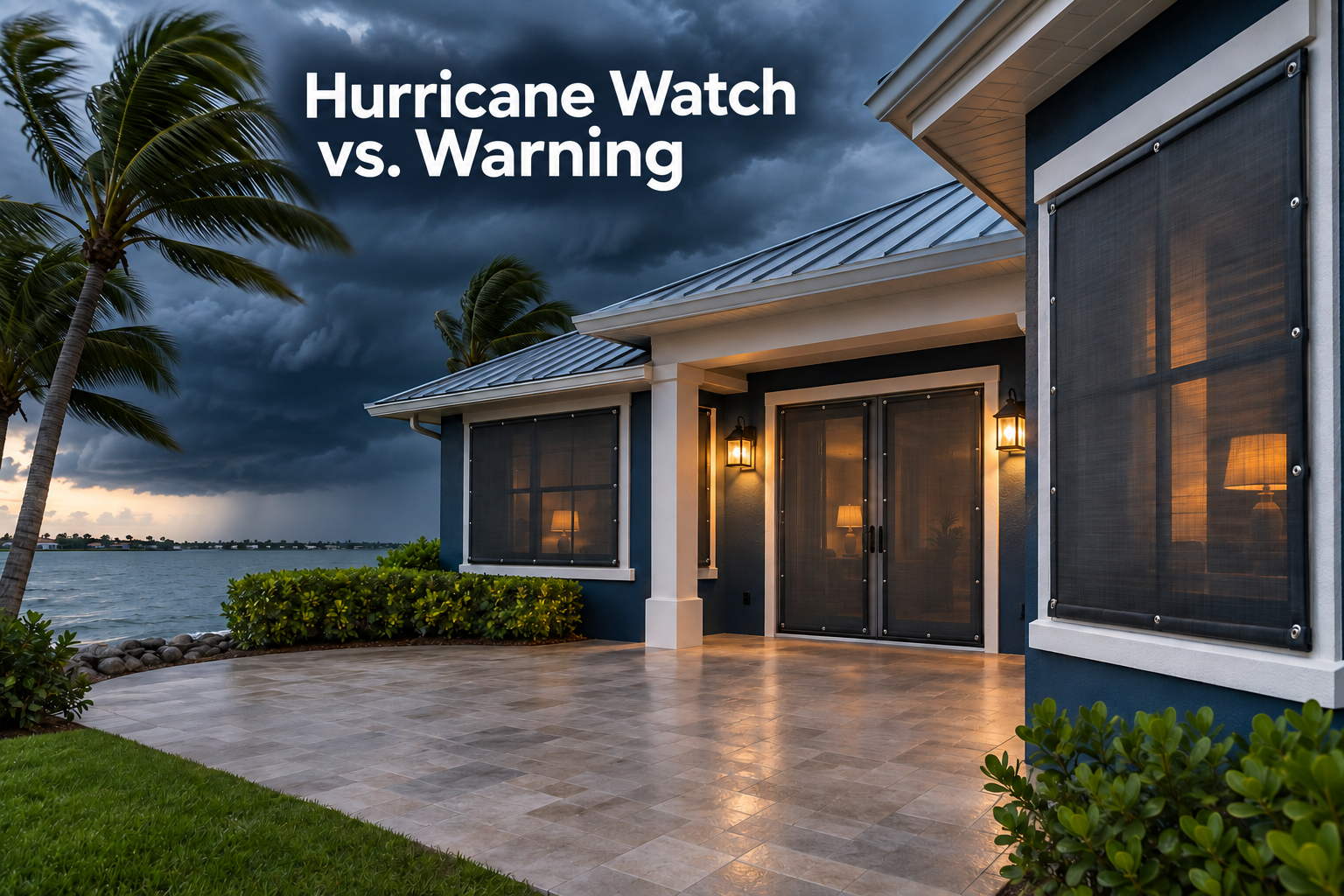
Quick answer: A hurricane watch means hurricane conditions are possible in the specified area. A hurricane warning means those conditions are expected. NOAA generally issues a watch about 48 hours before tropical-storm-force winds are possible and a warning about 36 hours before they are expected—because outdoor preparations can become dangerous once those winds arrive.
That difference matters: a watch is your signal to finish decisions and preparations; a warning means your plan should already be in motion. Neither alert guarantees the storm’s center will make landfall in your community. Always check the alert area, timing, forecast updates, and directions from local emergency managers.
What does a hurricane watch mean?
A hurricane watch means sustained winds of at least 74 mph are possible somewhere within the specified area. It is issued while there is still uncertainty about where and when hurricane conditions may occur. A watch is not a prediction that the storm will definitely hit your town, but it is a reason to act early.
Use a watch to review your household or business plan, confirm your evacuation zone and destination, check emergency supplies, and complete outdoor work while it is still safe. If you rely on temporary window coverings, confirm that all parts and tools are ready before conditions deteriorate. Do not climb ladders or attempt exterior work in dangerous wind.
What does a hurricane warning mean?
A hurricane warning means sustained winds of at least 74 mph are expected somewhere within the specified area. NOAA’s standard lead time is generally 36 hours before tropical-storm-force winds are expected to begin. That shorter window is why major preparations should not wait for a warning.
When a warning is issued, follow local instructions, including any evacuation order. Keep monitoring official updates and shelter in a safe location away from windows if you are not ordered to evacuate. A warning describes expected hurricane-force winds in an area; it does not say that every location in the area will experience the same wind speed.
Hurricane watch vs. warning: what’s the difference?
- Watch: Hurricane conditions are possible. Review the plan and complete safe preparations.
- Warning: Hurricane conditions are expected. Finish only safe final steps and follow emergency instructions.
- Typical lead time: A watch is generally issued 48 hours before tropical-storm-force winds are possible; a warning is generally issued 36 hours before they are expected.
The clock refers to the anticipated onset of tropical-storm-force winds, not the storm’s landfall time. Watches and warnings may be updated, expanded, or canceled as forecasts change. Check the latest National Hurricane Center and local National Weather Service information rather than relying on an old screenshot or a single forecast graphic.
Is a hurricane warning the same as a storm surge warning?
No. A hurricane warning concerns expected hurricane-force winds. A storm surge warning means there is danger of life-threatening coastal inundation from rising water moving inland. The alerts can be issued together or separately, and storm surge can be dangerous even when wind conditions are below hurricane strength.
If you live in an evacuation zone, near the coast, or in a flood-prone area, learn your zone before a storm forms. Follow evacuation directions from local officials immediately. Hurricane screens and other opening protection address wind-driven debris and building openings; they do not make a property safe from storm surge or flooding.
What should you do when a hurricane watch is issued?
- Read the alert for your specific location and note its valid times.
- Review your evacuation route, destination, transportation, and plan for pets or anyone needing assistance.
- Secure outdoor furniture and loose objects, and check that your supplies and important documents are ready.
- Complete any planned window and door protection well before hazardous winds arrive. Permanent systems should be selected and installed ahead of hurricane season.
- Keep receiving official alerts and be prepared to follow local evacuation instructions.
What should you do when a hurricane warning is issued?
Take the warning seriously and follow emergency management directions. If officials order you to evacuate, leave promptly; do not wait to see whether the forecast track shifts. If you are staying in a safe location, complete only steps that can be done without exposing yourself to wind, lightning, flooding, or falling debris. Stay away from windows and glass doors, and keep a way to receive updates if power or internet service is interrupted.
Frequently asked questions
Does a hurricane warning mean the eye will pass over my home?
No. It means hurricane conditions are expected somewhere in the warning area. A storm’s impacts can extend well beyond its center, and the forecast can change. Use local forecasts and official instructions for decisions.
Can a hurricane watch become a warning?
Yes. As confidence and timing change, the National Hurricane Center may upgrade, expand, adjust, or cancel alerts. Keep checking official updates throughout the event.
Should I wait for a watch before preparing my home?
No. Prepare in advance. Keep your emergency plan and supplies current, and make decisions about permanent protection before a storm threatens. Learn more in our guides to hurricane preparation and why windows and doors are vulnerable in a hurricane.
Plan before the alert
Knowing the difference between a hurricane watch and a warning gives you a clearer timeline, but the safest preparations happen before either alert is issued. Review your property’s openings, decide how they will be protected, and confirm your family or business plan in advance. Explore Atlas Armor hurricane screen options and contact the team if you want to discuss a protection plan for your property.


